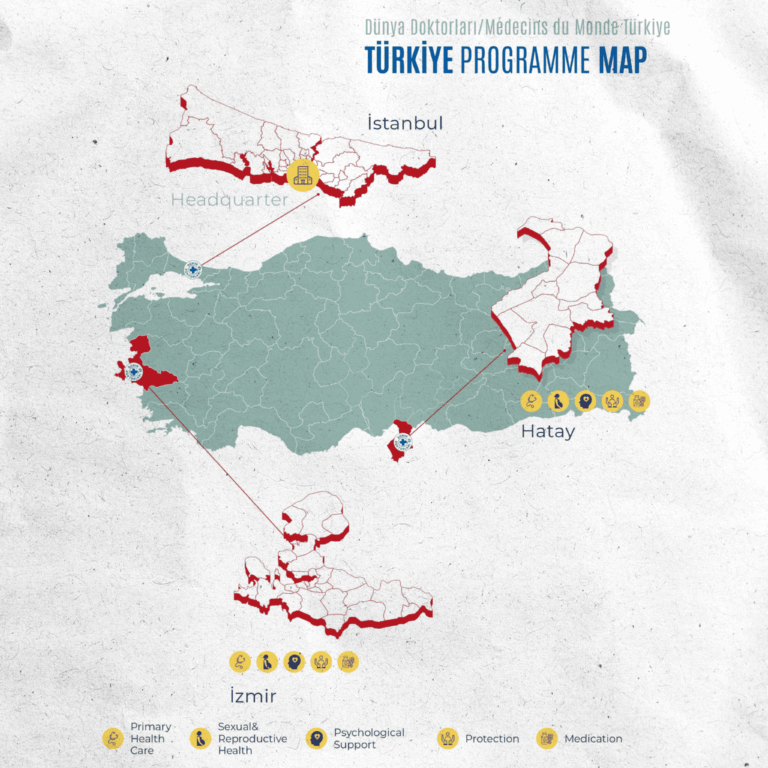



TÜRKİYE PROGRAMME
CONTEXT: POST-EARTHQUAKE RESPONSE
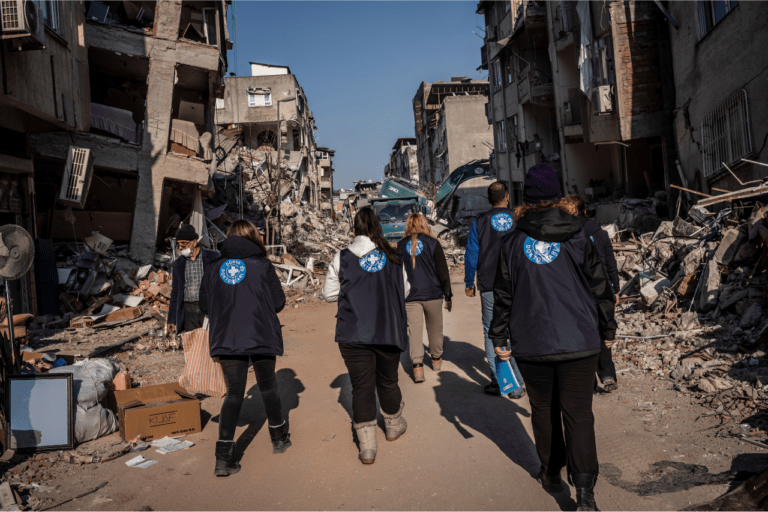
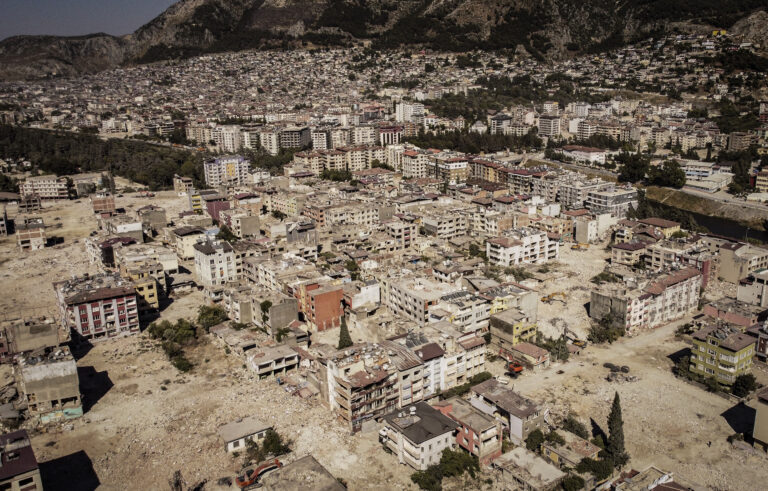
More than two years after the devastating earthquakes of February 6, 2023, Hatay and other affected provinces continue to face significant humanitarian challenges. The earthquakes, which killed more than 58,000 people and displaced millions across Türkiye and Northwest Syria (NWS), caused unprecedented destruction to homes, health facilities, and essential infrastructure.
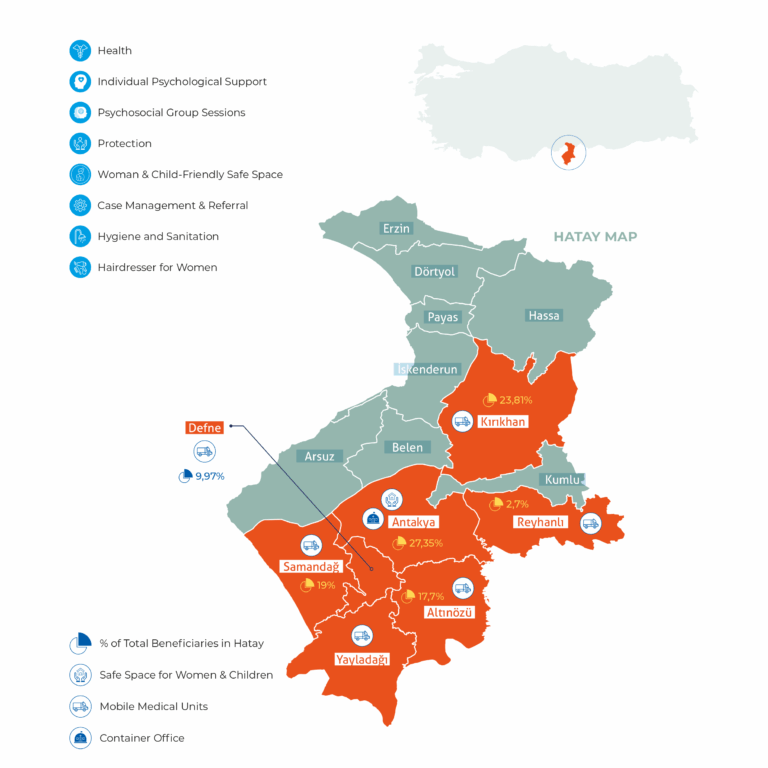
In Hatay, the most severely affected province, 218,379 people still reside in overcrowded container cities as of February 2025, with thousands more living in informal settlements. These conditions exacerbate public health risks, with inadequate water, sanitation, and hygiene (WASH) facilities contributing to the rise of communicable diseases such as scabies, lice, and fungal infections. Assessments by Dünya Doktorları (DDD)/Médecins du Monde (MdM) Türkiye revealed that 18% of beneficiaries suffered from upper respiratory tract infections and 7% from scabies in 2024, reflecting the precarious living conditions in Hatay following the earthquake.
The destruction of hospitals, family health centers, and migrant health centers, coupled with the loss of qualified medical personnel due to death, injury, or displacement, has significantly reduced access to healthcare, particularly in rural areas. While some facilities have reopened, they remain understaffed and operating below capacity. Pregnant women and children face critical gaps in sexual and reproductive health (SRH) services; 25% of pregnant women monitored showed complications such as oedema, hypertension, or anemia. Mental health needs are also acute, with 35% of beneficiaries referred for psychosocial support, while awareness of available services remains low (15%).
Protection risks have worsened as a result of unsafe living conditions, prolonged displacement, and socio-economic stress. Gender-based violence (GBV), child labor, early marriage, and negative coping mechanisms have increased, particularly in isolated rural areas and informal settlements. In addition, many unregistered refugees have faced the deactivation of their identity documents, rendering them unable to access basic services or update their legal addresses, and leaving them at heightened risk of deportation.
In Western Türkiye, notably İzmir, thousands of earthquake-displaced individuals and refugees continue to live in precarious conditions, of ten as undocumented agricultural workers in rural settlements. These sites have little to no access to clean water, sanitation, and healthcare, posing significant risks of disease outbreaks, exploitation, and protection violations, including GBV and child labor.
Overall, despite recovery efforts, the humanitarian situation in Türkiye remains critical, especially for vulnerable populations such as women, children, people with disabilities (PwD), those with chronic illnesses, and undocumented refugees and migrants. The need for sustained healthcare, SRH, mental health and psychosocial support (MHPSS), protection interventions, and durable shelter solutions remains high, while operational access is often hindered by stringent government approval processes.
© Hüseyin Aldemir for Dünya Doktorları/Médecins du Monde Türkiye
CONTEXT: MIGRATION
The earthquakes of February 2023 compounded an already complex migration and protection landscape in Türkiye, particularly in İzmir, İstanbul, and Hatay—provinces hosting some of the highest numbers of Syrian refugees and other migrant communities in the country.
Hatay
Hatay, one of the most severely affected provinces by the earthquakes, hosts a large population of Syrian refugees, many of whom remain unregistered or have lost their identity documents due to the destruction of their registered homes. The inability to update legal addresses has left many unable to access essential services such as healthcare, education, and social support. Hatay remains closed to new Temporary Protection Identification (TPID) registrations, worsening the situation for undocumented migrants.
Protection risks are acute, especially in informal settlements and rural areas, where overcrowded living conditions, lack of privacy, and poor security contribute to increased gender-based violence (GBV), child labor, early marriage, and other forms of exploitation. The prevalence of GBV and child protection concerns has increased as negative coping mechanisms rise amid prolonged displacement and unemployment. Coordination challenges with law enforcement on child protection cases and inconsistent responsiveness to referrals further exacerbate vulnerabilities.
İzmir
İzmir remains a central hub for refugees and migrants due to its established migration networks, economic opportunities, and geographical proximity to the Greek islands, making it both a transit and destination location. Since the earthquakes, İzmir has seen an influx of earthquake-displaced populations from Hatay and other affected provinces, including Syrians and other undocumented migrants.
Many of these displaced populations live in unofficial rural tented settlements, working as seasonal agricultural laborers. These settlements are characterized by poor living conditions, a lack of running water and sanitation, and limited access to healthcare and protection services. Refugees in rural İzmir face heightened risks of exploitation, including GBV, child labor, and hazardous working conditions.
Urban migrants in İzmir, particularly those with irregular status, face difficulties accessing health, education, and social services due to legal and administrative barriers. Increasing administrative restrictions, such as the closure of neighborhoods to new registrations, have further reduced their ability to legalize their status and access protection mechanisms.
İstanbul
İstanbul hosts the largest refugee population in Türkiye, with 529,403 Syrians officially registered under temporary protection as of December 2024. The city attracts refugees due to its economic opportunities and established migrant networks; however, irregular migrants and refugees with deactivated or expired IDs face significant risks of deportation.
In densely populated districts such as Zeytinburnu, Esenyurt, and Fatih, many migrants live in informal, overcrowded accommodations, where protection risks—including GBV, child labor, and early marriage—are prevalent. Migrants and refugees working in informal sectors such as textiles, construction, or day labor face exploitation, low wages, and unsafe working conditions. Access to healthcare, education, and social protection remains extremely limited for undocumented individuals.
Protection Challenges Across Locations
- Legal and documentation barriers: Unregistered refugees and migrants struggle to regularize their status, update legal addresses, or obtain TPIDs, leaving them unable to access public services and exposed to detention and deportation.
- Living conditions: Overcrowded shelters, container cities, and rural tented settlements lack adequate WASH facilities and privacy, in creasing the prevalence of GBV and child protection risks.
- Health and psychosocial vulnerabilities: Migrants and refugees face barriers to accessing primary and secondary healthcare, particularly SRH and MHPSS services. Awareness of available support services remains low.
- Socio-economic pressures: Widespread unemployment, reliance on informal work, and the rising cost of living push families into harmful coping strategies, including child labor, early marriage, and survival sex.
Key Gaps and Needs
- Expansion of mobile health and protection services to reach informal settlements, rural areas, and hard-to-access urban locations.
- Enhanced legal and case management support to assist refugees and migrants in addressing documentation and administrative barriers.
- Scaling up MHPSS services to address trauma, psychosocial distress, and harmful coping mechanisms.
- Strengthened community-based protection mechanisms, including GBV prevention, child protection interventions, and referrals.
The combination of legal insecurity, deteriorating socio-economic conditions, and persistent post-earthquake displacement has amplified vulnerabilities among migrants and refugees in İzmir, İstanbul, and Hatay, underlining the need for sustained humanitarian protection interventions.
© Dünya Doktorları/Médecins du Monde Türkiye