

FROM RUBBLE TO RECOVERY:
AYOUSH’S JOURNEY OF HOPE AND HEALING
Safe Spaces for Women’s Health in Northwest Syria
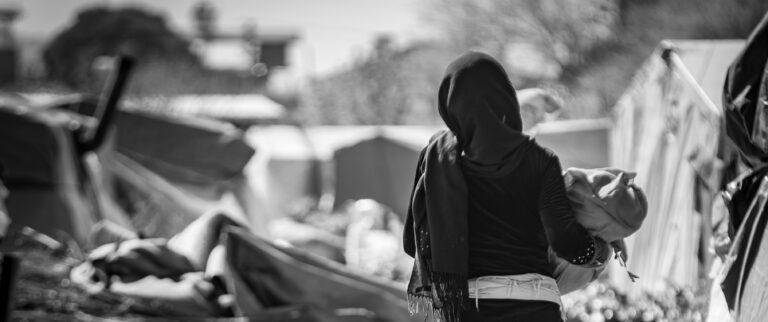
The morning light creeps through the cracks of a broken wall in a town of Idlib still carrying the scars of Syria’s long war. The air smells faintly of dust and bread baking over charcoal. In a small, crowded home, Ayoush Qazzeh, a 39-year-old woman, begins another day that feels both fragile and defiant. A mother of four, Ayoush has weathered the storms of conflict, displacement, and poverty – all while nurturing her children with the limited resources available to her.
She sweeps the floor, folds her daughter’s clothes, and prepares tea with hands that have carried more than most can imagine: Four children, each born under the shadow of conflict, and years of loss she can never quite name.
“I don’t remember a day without worry,” she says softly. “But when you’re a mother, you learn to keep breathing – even when everything around you has stopped.”
© Ahmad Hallak, Dünya Doktorları
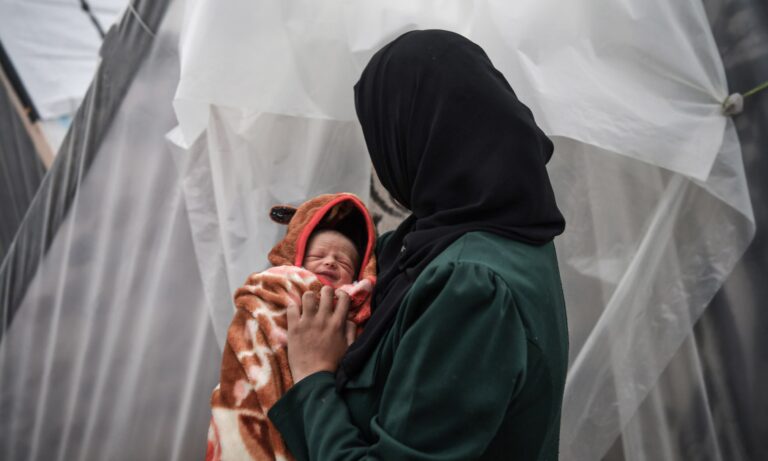
Ayoush, a 39-year-old Syrian mother, visiting DDD’s health center in the Idlib Governorate to receive maternal and child health care.
A Silent Battle for Survival
Before she found help, Ayoush’s world revolved around survival. Her pregnancies went unmonitored; her C-sections performed with minimal follow-up, a procedure that, in her circumstances, came with heightened risk. She relied on instinct, and luck, to stay alive.
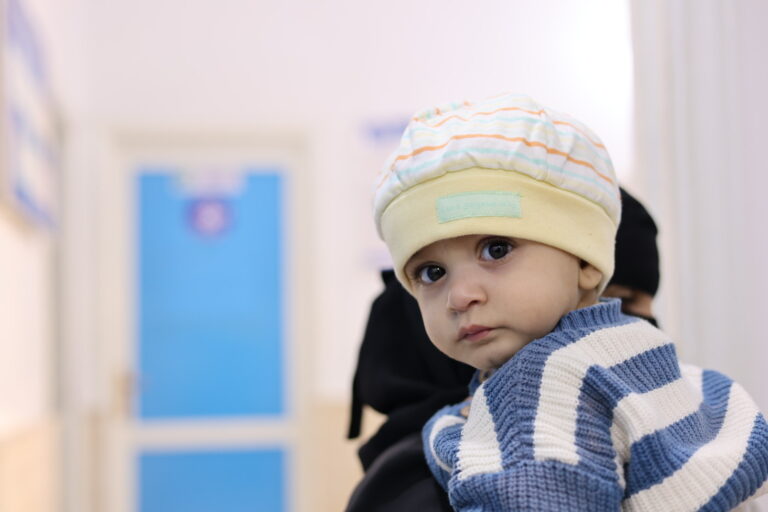
When her youngest, Warda, was born, Ayoush noticed her baby’s arms were thin, her cries weak. There was no doctor to call, no medicine to give. Warda, now seven-month-old, suffered from malnutrition as a baby – a painful reminder of the gaps in maternal and child health services during times of crisis.
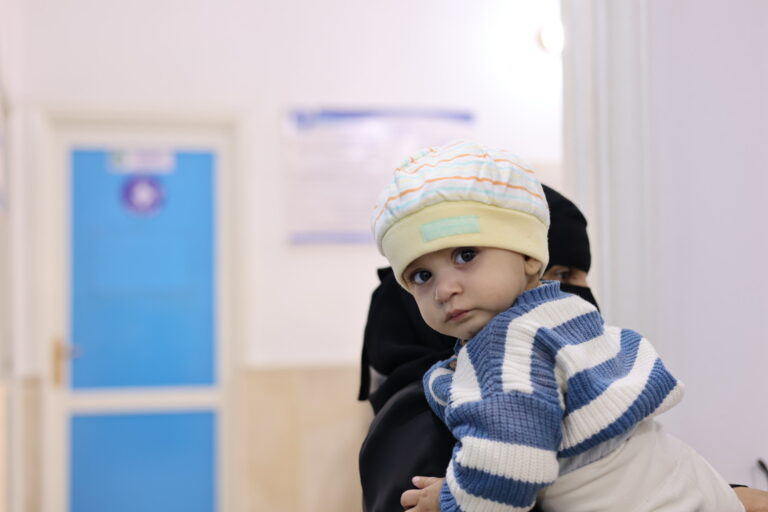
© Ahmad Hallak, Dünya Doktorları
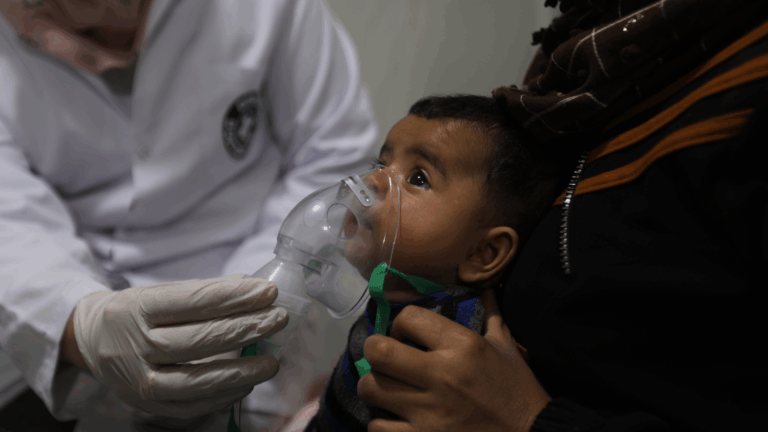
7-month-old Warda, the youngest baby of Ayoush, was suffering from malnutrition. She receives medical treatment from DDD.
I WOULD HOLD HER ALL NIGHT, TRYING TO FEED HER. BUT MY BODY HAD NO MILK LEFT. I WAS STARVING TOO.”
Warda survived, barely, but the experience left Ayoush haunted. “A mother should never have to wonder if her baby will live through the night,” she says.
When the Clinic Doors Reopened
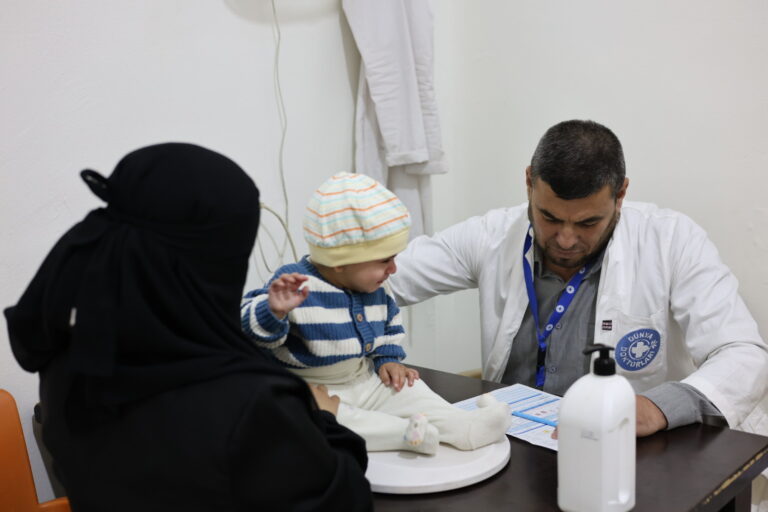
Everything changed the day she heard that a primary health care center in this town of Idlib had launched. Operated by Dünya Doktorlari Derneği (DDD – Doctors of the World), the center now had a functioning sexual and reproductive health (SRH) unit, offering maternal care, family planning, and counseling.
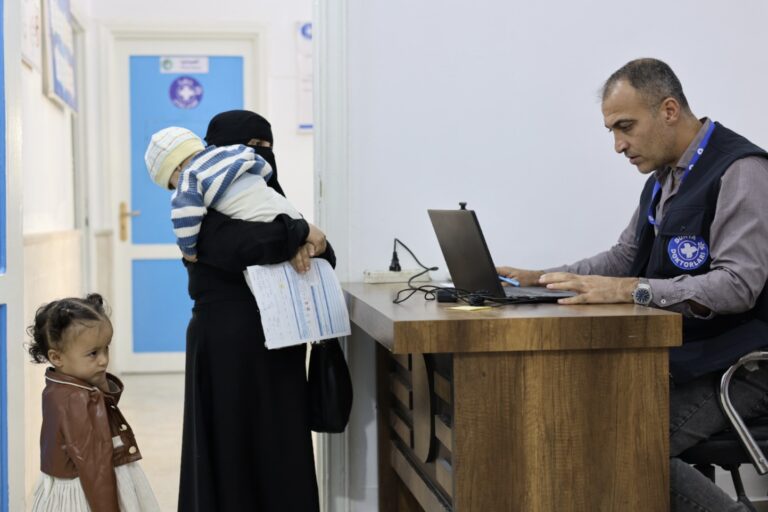
© Ahmad Hallak, Dünya Doktorları
Warda, with her mother Ayoush, is during a medical check at DDD's health center in Idlib, Syria.
“It felt like the war had taken everything — and then suddenly, someone gave something back,” says Ayoush. “When I walked into that clinic, I felt seen for the first time in years.”
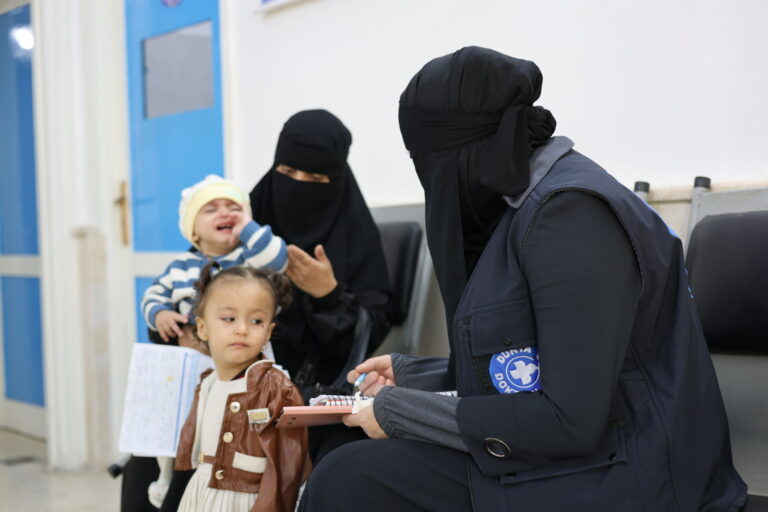
There, she met Fatima, a community health worker who visits women’s homes to offer prenatal check-ups, breastfeeding support, and health education.
“When I first met Ayoush, she was exhausted – but determined,” Fatima recalls. “She had survived four pregnancies without care. I told her, ‘You don’t have to do this alone anymore.’”
© Ahmad Hallak, Dünya Doktorları
Fatima, a community health worker of DDD, giving health information session to Ayoush who visited the clinic to receive medical treatment for her baby. Idlib, Syria.
In northwest Syria, clinics like in this small town of Idlib are more than medical facilities. They are sanctuaries of safety and dignity for the Syrian people.
“Some women walk for hours to reach us,” says Dr. Lina Al-Hassan,DDD’s SRH Coordinator in Idlib. “They come carrying trauma, fear, and silence. We offer care; but we also offer listening. That’s what healing begins with.”
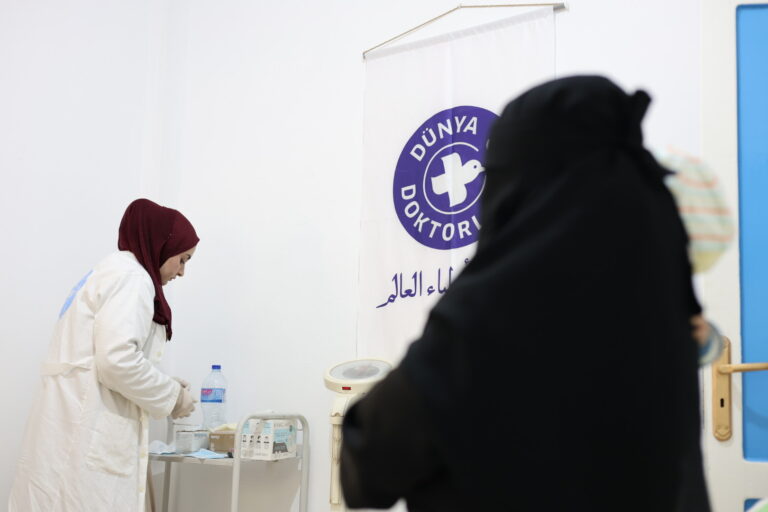
Inside the clinic, the air hums with quiet purpose: a baby’s first cry, the rhythmic beeping of a monitor, the reassuring voice of a midwife. For Ayoush, this environment is transformative.
“WHEN I SEE OTHER MOTHERS IN THE WAITING ROOM, I REALIZE WE ALL CARRY THE SAME PAIN. BUT HERE, WE ALSO SHARE STRENGTH.”
© Ahmad Hallak, Dünya Doktorları
The Bigger Picture: Syria’s Unfinished Recovery
Across Syria, the health system remains on life support. Maternal and newborn care is at crisis levels. Many doctors have fled, and those who remain earn less than $40 a month. Women often give birth at home, alone, without sterile equipment or trained support.
Yet amid this collapse, DDD and and its partners in Syria sustains a lifeline:
- Operating 10 health centers in Aleppo and Idlib that provide maternal, newborn, and reproductive health services;
- Training female community health workers (83% of staff) to reach mothers in isolated or unsafe areas;
- Providing mental health and psychosocial support through female counselors and psychologists;
- Supporting Syrian midwives with continuous training and supplies;
- Conducting cross-border assessments to advocate for stronger maternal health systems.
Last year alone, 39,000 Syrians — 60% women and girls — received care through DDD-operated clinics.
“Every safe delivery, every child fed, every woman who smiles again… That’s how recovery begins,” says Fatima, who continues to walk from house to house under the Idlib sun. “We are not just rebuilding hospitals. We are rebuilding hope for the people of Syria who have been suffering from the scars of 13-year brutal war.”
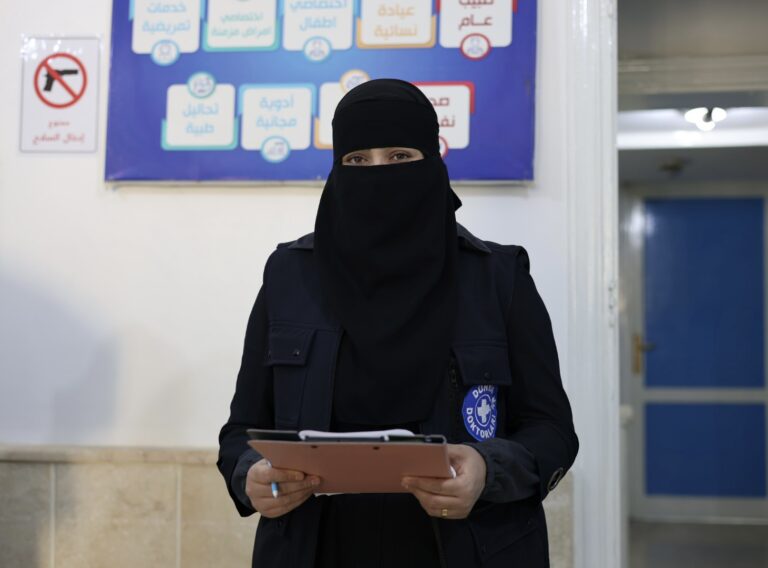
© Ahmad Hallak, Dünya Doktorları
Fatima, a community health worker with DDD, visits women’s homes to offer prenatal check-ups, breastfeeding support, and health education.
Why Continued Support Matters
Syria’s recovery is still fragile. Without sustained international funding, clinics in the region could close their doors once again, cutting off the only safe space thousands of women have.
“If this clinic disappears,” Ayoush says, “it’s not just a building we lose. It’s our chance to live.”
From the rubble of war, women like Ayoush are proving that healing is possible: one birth, one breath, one act of care at a time.
“We cannot rebuild Syria without rebuilding its women,” Dr. Al-Hassan concludes. “And that begins with keeping every safe space for care open.”
By sustaining maternal and reproductive health programs in Syria, we ensure that women like Ayoush, and thousands more, can access health care, safety, and dignity.
Because recovery is not only about rebuilding walls. It’s about rebuilding lives.
PRESS RELEASE
- DDD Communication Team communication@dunyadoktorlari.org.tr
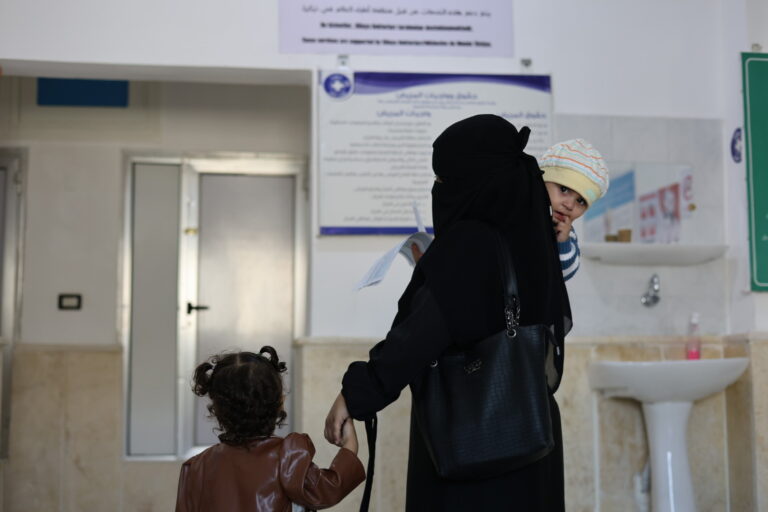
© Ahmad Hallak, Dünya Doktorları